APARTMENT TEDO
| |
| |
 Sightseeing
suggestions on this page
Sightseeing
suggestions on this page
Photo Album
 Sightseeing
pictures
Sightseeing
pictures
- Kravica Waterfalls - must see
- Mljet - The Green Island
- The Bacina Lakes near Ploce
- Norinska Tower - a historic icon
- Narona, ancient site of Roman administration
- Dubrovnik - The Pearl of the Adriatic
- Mostar in
Bosnien-Hercegovina
- The Trsteno Arboretum - Botanical Garden
- Medjugorje Pilgrim site
- Canoe safari
 Full
sightseeing information on the Komarna Sightseeing Pages.
Full
sightseeing information on the Komarna Sightseeing Pages.
Kravica Waterfalls
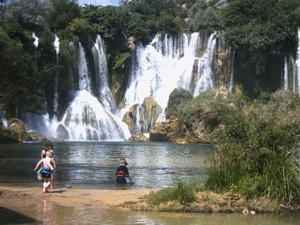 This
place is fantastic. No matter what else you choose to do in your
vacation, going here will be one of the most memorable trips. The
water comes from an underground river so it is cold to say the least.
It is also very clear making it an ideal place for children to fish
with nets. It is also a very good place to swim.
This
place is fantastic. No matter what else you choose to do in your
vacation, going here will be one of the most memorable trips. The
water comes from an underground river so it is cold to say the least.
It is also very clear making it an ideal place for children to fish
with nets. It is also a very good place to swim.
If you cross the small lake, you may relax on the rocks underneath the waterfall before heading back. If you are a daredevil you can climb the cliffs on the far side and jump into the lake like the young locals do to impress each other. If you look at the picture, it might not seem like much of a jump. Even so, trust us: Most people will have second thoughts about even climbing up there - and much more so about actually leaping off the cliff.
If you go to Kravica in the middle of summer you are likely to experience that you drive up there in clear weather, you stay there while it's overcast and the sun bakes you in the car going back. Our (not very scientific) thoughts on the matter are as following: A lot of water particles are hurdled into the air by the drop from the river into the lake. The small particles then vaporize when they are exposed to the hot sun creating a local mist/ overcast.
Mljet - The Green Island
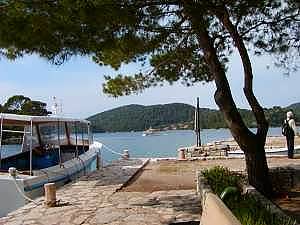 Mljet
is special and even among the other beautiful island of Dalmatia it
stands out because of its different geology and vegetation. Mljet is
37 km long and only an average of 3 km wide. Much of the island's
mountains are covered by pine forest and between the mountain ranges,
are fertile karst valleys.
Mljet
is special and even among the other beautiful island of Dalmatia it
stands out because of its different geology and vegetation. Mljet is
37 km long and only an average of 3 km wide. Much of the island's
mountains are covered by pine forest and between the mountain ranges,
are fertile karst valleys.
There is a car ferry from Prapratno close to Ston to Sobra on Mljet.
Check on Jadrolinija
website for departure times. The crossing time is 45 minutes.
The one place you must visit on Mljet is the lakes in the western
part. They are surrounded by pine forest, and a lovely environment
where many people spend the whole day just walking around.
There are so many places worth a visit on Mljet that if you stay longer than a day or plan to come back you should buy a guide book. In the books are often mentioned the Cave of Odysseys. Legend has it that Calypso, the stunningly beautiful daughter of Poseidon, found Odysseys after a shipwreck, fell in love with him and kept him in sweet captivity in this cave for seven years.
Visit the Sightseeing and Activity pages for more information about Mljet.
The Bacina Lakes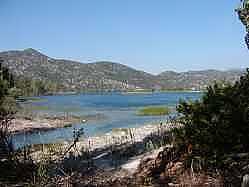
If your skin dries out from too much saltwater at the beach, you could opt for The Bacina Lakes thirty minutes drive to the north of Komarna. The six interlinked lakes are in spectacular view from the main coastal highway just north of The Neretva Delta.
The lakes are very popular with the locals during the weekends. If you go there, you should bring snorkeling gear and (if you have small children) fishing nets as well. It's not a coral reef but there are plenty of fish in there.
If you keep left when you turn of the main road you will pass a place where you can rent boats to take you out on the water.
The Norinska Tower and its Twin
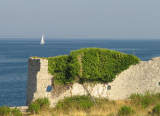
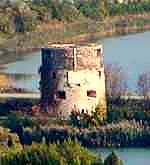 The tower by the road between Opuzen
and Metkovic is all that's left of a (presumably massive) Turkish
fortification from the early 16th century. The tower has a twin in a
mountain pass inside Bosnia-Herzegovina.
The tower by the road between Opuzen
and Metkovic is all that's left of a (presumably massive) Turkish
fortification from the early 16th century. The tower has a twin in a
mountain pass inside Bosnia-Herzegovina.
We are trying to find out the name of 'The Twin', but it seems to
have faded into oblivion. Very few people have heard of it and even
fewer seen it. Nevertheless, it's there all right. If you take the
inland road from Neum, you'll ascent into the rouged mountains of The
Balkans, and you will eventually reach the fortress on your left-hand
side. It might take you up to an hour depending on how fast you are
willing to go.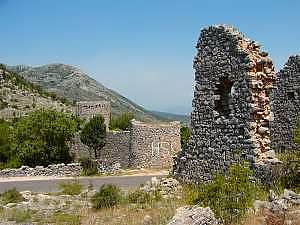
The Twin is on a plain, which is littered with rocks of all shapes and sizes. For some reason, there does not seem to be a whole lot of settlements up there so there haven't been people looting the place for building materials through the centuries. This is the fate; we imagine The Norinska Tower suffered. There aren't a lot of rocks in the delta where it lies but there are plenty of people who have all build houses from rocks. So: down it went.
The road leading up to The Twin isn't bad as Bosnian Mountain roads
go. If you continue along the road, you will eventually hit the
Metkovic- Mostar highway. Along the way, the passengers in the car can
enjoy some of the most staggeringly beautiful scenery the region has
to offer. These are the stuff postcards are made of. 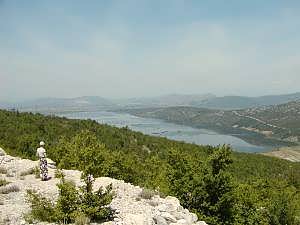
However, there is a catch: The driver should keep his eyes on the
road! Unless he is used to driving in mountains or is willing to learn
along the way this is NOT the road to follow. There are no crash
fences, and the road is so narrow that you will have to put the car in
reverse if you are so unlucky that you meet an oncoming truck (the
truck driver won't do it. You can bet on that). The trip from Neum to
the highway can easily take two and a half hours. This might not seem
possible if you look at a map. However do keep in mind that distances
are not really an indication of time, when you are in the mountains.
Narona
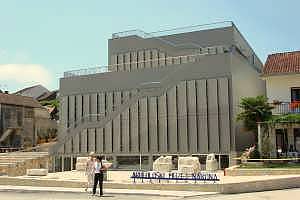 Narona
is
some 2500 years old. Alexander The Great's historian Theopompus
mentioned Narona in the fourth-century BC. Back then it was one of the
dozens of Greek settlements surrounding the north eastern part of the
Mediterranean. The Roman Empire eventually promoted the town to the
rank of a colony, and it was the administrative and military centre of
the region.
Narona
is
some 2500 years old. Alexander The Great's historian Theopompus
mentioned Narona in the fourth-century BC. Back then it was one of the
dozens of Greek settlements surrounding the north eastern part of the
Mediterranean. The Roman Empire eventually promoted the town to the
rank of a colony, and it was the administrative and military centre of
the region.
It took the Romans many years to gain full use of the town. The
important waterways were full of pirates, and it didn't really grow as
a business centre until they were wiped out. A few hundred years later
it was the towns own turn to be wiped out. In the middle of the
seventh century AD an earthquake laid the town in ruins. 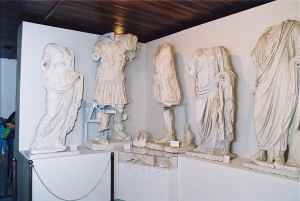 This was the beginning of the end
for the town. It never regained its status, and it is believed that it
was completely abandoned a hundred years later.
This was the beginning of the end
for the town. It never regained its status, and it is believed that it
was completely abandoned a hundred years later.
There are some excavation and restoration going on in the area, but it's very limited in comparison to the resources most other governments would set aside for the job.
You can see the remains of the walls that once surrounded the town and there is a museum on top of the Roman Forum. This is definitely not Rome, but it can make a nice trip if you are interested in these sorts of things. The museum houses the largest collection of Roman emperor statues found outside Rome. It is open weekdays except Monday from 1000 to 2000 Sunday it closes at 1300.
Dubrovnik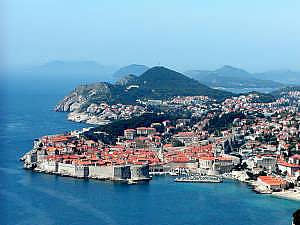
One word: Go!
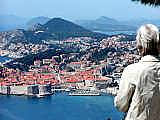
Allow yourself at least one excursion. Dubrovnik is known as The Pearl of The Adriatic and it is a United Nations UNESCO Heritage Site.
Rich merchants have left a city plastered with magnificent Gothic, Renaissance and Baroque building.
The city walls encirceling the old town are quite something. You can
easily get carried away to times long gone. When we were there in 2013
there was a film crew shooting for Game of Thrones.
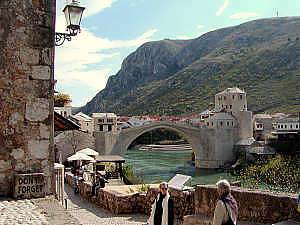
Mostar
East meets west in Mostar. The town lies an easy 60 kilometer drive
up the Neretva Valley. The must-see for all tourists is the Stari Most
- The Old Bridge which was build by the Turks in the 16th century.
Both sides of the bridge are always teeming with tourists taking
pictures of the bridge and the mosques, looking at hookahs, copperware
and oriental looking clothing in the many shops in the city centre.
Visit the Sightseeing and Activity pages for information about Mostar .
The Trsteno Arboretum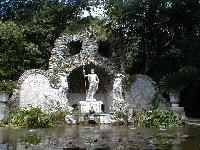
The botanical gardens at Trsteno north of Dubrovnik were founded in 1492. It has more than 300 species of trees and numerous plants from around The Mediterranean and the world. Together with the architecture from the Gothic-Renaissance period this makes The Trsteno Arboretum one of the finest gardens in this part of Europe.
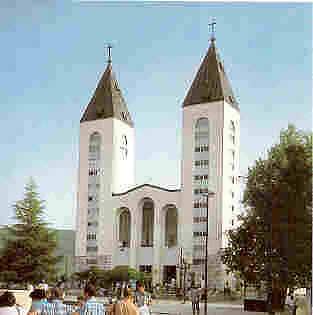 Medjugorje
Medjugorje is in Bosnia-Herzegovina off the road between Metkovic and Mostar.
Since 1981 more than 20 million pilgrims have visited Medjugorje. It makes it one of the biggest Catholic pilgrim places along side Lourdes in France.
Kite Surfing at the Neretva River Mouth
Great fun and not so difficult. Instructors are available from April to November.
Find the beach by going towards Opuzen. Turn left at the traffic
light towards Blace. At the end of the road turn right towards Camp
Rio. Go past camp Rio and continue until the road divides. Turn left
and go to the end of the road where you find kites and surfers on the
beach on your left.
Canoe Safari
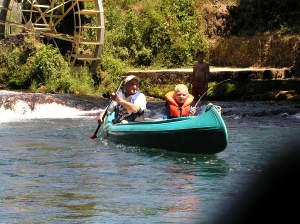 The Canoe safari starts in Bozjak
near Studenci just after the Kravica waterfalls and ends at the
meeting point in Struge near Capljina. The trip is 11 kilometres long
and runs through stunningly beautiful karst landscape formed by the
river over thousands of years.
The Canoe safari starts in Bozjak
near Studenci just after the Kravica waterfalls and ends at the
meeting point in Struge near Capljina. The trip is 11 kilometres long
and runs through stunningly beautiful karst landscape formed by the
river over thousands of years.
The beginning of the trip is quiet and calm sailing and towards the
end when the river runs a little faster it gets more exciting with a
few small and fun cascades. It is easy and quite safe even for
beginners. The canoes are stable and easy to handle.
Crystal clear water, waterfalls and birds will make sure that you will not easily forget this day.
Link to website for "Adventure Trebizat" where you can read all about the canoe safari.